When Good Neighbors Disagree: The Real Story Behind Our Main Street Tensions
The Parking Wars Are About More Than Parking
You’ve probably noticed the tension at the last few neighborhood association meetings. On one side, longtime business owners frustrated about losing street parking to new bike lanes. On the other, newer residents and businesses pushing for more pedestrian-friendly infrastructure. Both groups want the same thing: a thriving Main Street. They just can’t agree on how to get there.
The parking issue isn’t really about parking. It’s about two different visions of economic vitality colliding in real time. Frank’s Hardware has operated here since 1987. He built his customer base around people driving in from surrounding neighborhoods to pick up supplies. The new coffee roastery and bookstore combo sees their future in foot traffic and cycling customers. Neither vision is wrong, but they need different infrastructure.
What makes this messy is timing. The city’s infrastructure grants favor green transportation projects right now, which influenced the bike lane decision. But that same grant timeline didn’t account for existing businesses having six months to adapt their customer flow patterns. Frank isn’t anti-environment. He just doesn’t want to lose his regular customers who can’t figure out where to park their trucks when they need a new water heater.

The Permit Process Nobody Talks About
Here’s where things get really interesting. I spent last Tuesday morning at City Hall pulling permit records, and the numbers tell a story that neither side mentions publicly. Over the past three years, seventeen new businesses have opened on our main drag. Fourteen of them sailed through the permit process in under sixty days. Three faced significant delays, and all three were existing businesses trying to expand or modify their operations.
The bottleneck isn’t malicious, but it’s real. New businesses work with consultants who know exactly which forms to file and when. Existing businesses often try to handle permits themselves, assuming their familiarity with previous processes will carry them through. The city’s recent shift to digital-first permitting helped streamline applications for tech-savvy entrepreneurs while accidentally creating hurdles for established business owners who’ve always done things in person.
This creates a weird dynamic where newcomers can open faster than existing businesses can adapt. It’s not about favoritism. It’s about systems that evolved to solve one problem while accidentally creating another. The solution isn’t to slow down new business permits. It’s better support systems for existing businesses navigating change.
Money Talks, But Who’s Listening?
The economic data reveals another layer of complexity. Our Main Street generates about 23% more tax revenue per square foot than it did five years ago. That sounds great until you dig deeper. Twelve of our original businesses have closed in that same timeframe, while fifteen new ones opened. The net increase in revenue comes from higher-rent businesses replacing lower-rent ones.
This shift affects different community members differently. Long-term residents valued businesses like Martinez Auto Repair and Chen’s Alterations for their affordability and personal relationships. Newer residents appreciate the artisanal bakery and vintage clothing boutique for their quality and aesthetic. Both preferences make sense, but the market forces driving change aren’t neutral.
The businesses closing aren’t failing because they lack customers. They’re struggling because property values increased faster than their profit margins. Meanwhile, incoming businesses often have higher startup costs and different customer bases that can support higher price points. It’s not gentrification in the traditional sense, but it’s definitely economic transformation. Acknowledging this reality is the first step toward managing it intentionally rather than letting it happen by accident.
What Actually Works: Evidence from Next Door
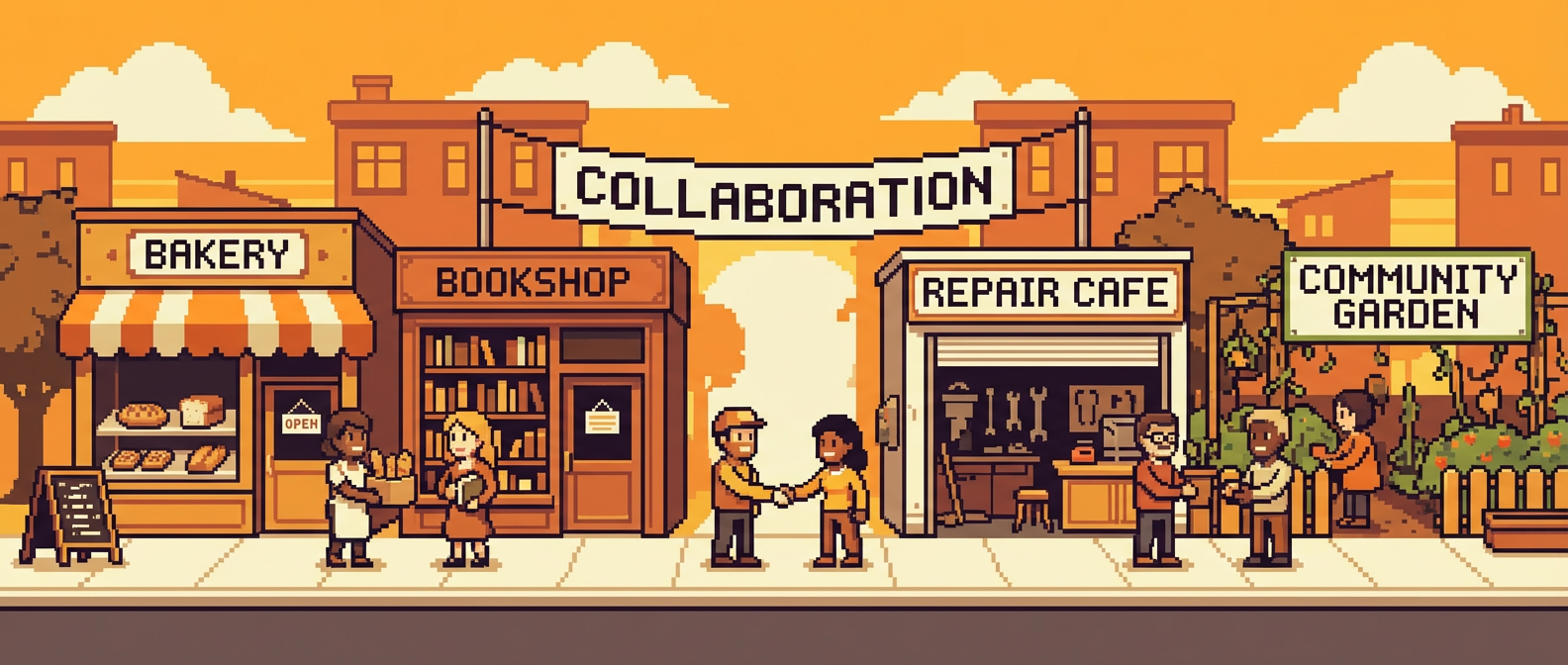
Before we despair, let’s look at what’s working elsewhere. The Riverside District, just eight blocks east, faced similar tensions three years ago. Their business association tried something different: structured collaboration instead of endless debate. They created working groups pairing long-term and newer businesses around specific challenges.
The parking working group developed a shared customer parking map highlighting underutilized lots within two blocks. The marketing working group created joint promotions that drove traffic to both established and new businesses. Most importantly, they established a mentorship program where successful longtime business owners shared operational knowledge with newcomers, while newer businesses shared digital marketing and social media expertise.
The results weren’t dramatic overnight success stories, but they were measurably positive. Customer retention improved for existing businesses adapting new strategies. New businesses reported faster community integration and better local supplier relationships. The key was focusing on mutual benefit rather than trying to resolve fundamental philosophical differences about neighborhood character.
Small Steps, Real Progress
Here’s what we can actually do, starting next month. The neighborhood association is piloting a “Business Bridge” program modeled on Riverside’s approach. Instead of trying to solve everything in monthly meetings where emotions run high, we’re creating smaller working groups focused on specific, solvable problems.
The first group tackles shared marketing opportunities. Several businesses want to collaborate on holiday events but need help with logistics and cost-sharing. The second group focuses on supply chain cooperation. Can multiple businesses coordinate orders to get better prices on locally-sourced products? The third addresses the parking puzzle by mapping actual customer traffic patterns rather than arguing about theoretical scenarios.
This isn’t about avoiding conflict or pretending everyone agrees. It’s about channeling disagreement into productive problem-solving. When Frank from the hardware store and Sarah from the bookstore work together on a joint customer survey, they’ll still have different priorities. But they’ll also discover shared interests they never knew existed.
The working groups start meeting next Wednesday at 7 PM in the community room at Branch Library. Each session includes coffee and pastries from local businesses, because even civic engagement works better with good snacks. Come ready to listen, contribute ideas, and maybe discover that your business neighbors aren’t as different as you thought. Bring your calendar, because once you see how much we can accomplish together, you’ll want to clear some Saturday mornings for the follow-up projects.

The Quiet Force: Why Voluntary Groups Are the Backbone of Crisis Response

What Your City Council’s 2025 Budget Actually Means for Your Neighborhood (Breaking Down the Numbers Over Coffee)
The Quiet Strength of Voluntary Organizations in Times of Crisis
About Author
