The Quiet Backbone of Crisis: How Voluntary Organizations Hold the Line When Systems Collapse
When the ground stops shaking or the floodwaters finally recede, the official response is often still stuck in traffic. Roads are gone. Supply chains are tangled. Institutional protocols, designed for order, meet chaos and stall. In that gap—the hours and sometimes days before the big machinery of aid rumbles into view—it’s the people already there who do the heavy lifting. Neighbors digging through rubble. A local church group turning its hall into a dormitory. A tiny nonprofit distributing water filters they’d stockpiled for just this moment. These aren’t the understudies waiting for the main cast to arrive. They are the first responders, and their work is not a prelude to the “real” aid effort. It is the foundation on which everything else is built.
I’ve spent more than twenty years in the messy, heartbreaking, and often awe-inspiring world of voluntary crisis response, from the Balkans to South Asia to the hurricane-scarred islands of the Caribbean. I’ve seen money and good intentions wasted on projects that ignored local realities. I’ve also seen a handful of volunteers with almost no budget achieve what a fleet of white SUVs could not. The difference, I’ve come to believe, lies not in resources or technology, but in something far more basic: trust, relationships, and a stubborn commitment to the dignity of the people being served. This is not a technical manual. It’s a reflection on what actually works, what doesn’t, and why the quiet, unglamorous work of voluntary organizations deserves more than just our applause—it deserves our strategic support.
The Distinctive Value of Voluntary Action
When a crisis erupts, the first people to respond are almost always the ones who live there. A neighbor pulling someone from a collapsed building, a local imam or priest organizing shelter, a community group setting up a makeshift kitchen—these actions happen before any international NGO has booked its flights. Voluntary organizations, especially those with roots in the affected area, hold a singular advantage: they are already known. They speak the language, understand the unspoken rules of the community, and know which families are most at risk. This isn’t just about efficiency. It’s about trust. In the disorienting aftermath of a disaster, people turn to those they recognize. An outside agency, no matter how well-meaning, has to earn that trust from scratch, often in a matter of hours. A local group has been building it for years.
This trust is a form of social capital, and it’s the most valuable currency in a crisis. It means that when a voluntary organization says, “We need to move people to higher ground,” the community listens—not because they’ve been ordered to, but because they believe the advice is sound. It means that when a group distributes aid, it reaches the people who need it most, not just the loudest or the most connected. And it means that when the cameras leave and the funding dries up, these organizations are still there, doing the slow, unglamorous work of recovery. They are not just service providers; they are part of the social fabric.
Another often-overlooked strength is flexibility. Large agencies are like oil tankers: powerful, but they take a long time to change direction. Voluntary groups are more like speedboats. They can pivot quickly when the situation on the ground shifts—which it always does. If a planned food distribution point becomes inaccessible, they can move it. If they discover that what people really need is not blankets but cooking pots, they can adjust. This agility is not a sign of amateurism. It’s a professional adaptation to the unpredictable nature of emergencies.

Principles That Keep Good Intentions from Going Bad
Good intentions are not enough. I’ve seen them cause real damage—creating dependency, undermining local markets, or simply wasting precious time. To be a constructive force, voluntary crisis response must be guided by a clear set of principles. These aren’t abstract ideals; they’re hard-won lessons from decades of mistakes.
1. First, Do No Harm
This sounds obvious, but it’s surprisingly easy to get wrong. When you’re desperate to help, it’s tempting to act first and think later. But aid can distort local economies if you import goods that local vendors are still selling. It can create jealousy and even violence between groups if you’re not careful about how you distribute resources. It can expose vulnerable people to new risks—for example, by setting up a shelter without adequate lighting or security for women and girls. Doing no harm means constantly asking uncomfortable questions: Are we hiring local labor at fair rates, or are we undercutting the market? Are we listening to the community’s own priorities, or imposing our own? Are we respecting people’s privacy and safety, or treating them as photo opportunities?
2. Respect Local Agency
People affected by crisis are not passive victims waiting to be rescued. They are the first responders, the problem-solvers, the ones who will rebuild their lives long after external organizations have packed up and left. Any response that treats them as helpless recipients is not only disrespectful but also ineffective. Voluntary organizations must work in genuine partnership with local communities, recognizing their expertise and supporting their initiatives rather than replacing them. This means asking, “What are you already doing, and how can we help?” instead of “Here’s what we’re going to do for you.”
3. Commit to Accountability
Accountability is not just about clean financial audits, though those matter. It’s about being answerable to the people you aim to serve. This means setting up real feedback mechanisms—not just a suggestion box that no one checks—and being willing to change course when communities tell you something isn’t working. It also means being honest about what you can and cannot do. Overpromising erodes trust and can leave people in worse situations than before. If you can’t deliver, say so. People can handle the truth; what they can’t handle is being strung along.
4. Prioritize the Most Marginalized
In any crisis, certain groups face disproportionate risks: people with disabilities, the elderly, ethnic or religious minorities, women and girls, and those already living in poverty. A principled response does not simply provide general aid and hope it reaches everyone equally. It actively identifies who is being left out and designs programs to reach them. This requires specific, often difficult, work—like ensuring distribution points are accessible to people with mobility issues, or providing sanitary products in a way that doesn’t embarrass anyone. It’s the measure of whether an organization truly serves humanity or merely its own sense of purpose.

The Practical Challenges Voluntary Organizations Face
Even with the best principles, voluntary organizations encounter significant obstacles in crisis response. Acknowledging these challenges is not a sign of weakness; it’s a prerequisite for addressing them honestly.
Coordination Without Command
In a large-scale emergency, dozens or even hundreds of voluntary groups may appear. Some are highly skilled; others are well-meaning but untrained. The absence of a clear coordination structure can lead to gaps in service, duplication, and confusion for affected communities. Unlike military or government agencies, voluntary organizations cannot be commanded. They must be coordinated through persuasion, shared standards, and mutual respect. This requires dedicated coordination mechanisms—often led by a neutral body—and a willingness among organizations to set aside competition for the sake of the common good. It’s a messy, time-consuming process, but there’s no way around it.
Sustainability of Effort
Voluntary organizations often excel in the immediate aftermath of a crisis, when adrenaline and media attention are high. But recovery takes years. The emotional and financial resources of small voluntary groups can be exhausted quickly. Without careful planning, they may collapse just when the community needs them most—during the long, unglamorous work of rebuilding livelihoods and social networks. Sustainable voluntary action requires realistic funding models, support for staff and volunteer well-being, and an honest appraisal of how long the organization can stay. Burnout is not a badge of honor; it’s a failure of planning.
Navigating Political and Security Constraints
Crises do not occur in a political vacuum. Voluntary organizations may find themselves operating in areas controlled by armed groups, or in contexts where the government views independent aid with suspicion. Maintaining neutrality and impartiality in such environments is extremely difficult. It demands constant negotiation, clear boundaries, and sometimes the courage to withdraw if the conditions make principled work impossible. There are no easy formulas here, only the hard work of ethical judgment in real time. And sometimes, the right decision is the one that breaks your heart.
Building Resilience Before the Next Crisis
One of the most important shifts in crisis response thinking over the past decade has been the move from reactive aid to proactive resilience. Voluntary organizations are uniquely placed to lead this shift because they are already embedded in communities during “normal” times. They can strengthen local capacities, support disaster risk reduction training, and help communities develop their own emergency plans. This work is not glamorous. It does not generate dramatic headlines. But it saves lives and preserves dignity when the next crisis hits.
Resilience is not just about physical infrastructure like flood barriers or earthquake-resistant buildings, though those matter. It is about social infrastructure: the networks of trust, the habits of cooperation, the local knowledge of who is vulnerable and how to reach them. Voluntary organizations are the custodians of this social infrastructure. Supporting them between crises is one of the most strategic investments any donor or government can make. It’s not charity; it’s foresight.

The Moral Core of Voluntary Service
At its heart, voluntary crisis response is an expression of solidarity. It says: “Your suffering is my concern, not because I am paid to care, but because we are bound together in a common humanity.” This moral core is what distinguishes voluntary action from commercial or governmental service, however professional those may be. It is also what makes voluntary organizations so difficult to manage and so essential to protect.
When I speak with volunteers who have worked through exhausting nights in refugee camps or emergency shelters, they rarely talk about logistics or funding. They talk about the people they met. The mother who walked for days with her children. The elderly man who refused to leave his home until someone he trusted came to get him. The young volunteer who discovered reserves of courage she did not know she had. These stories are not sentimental asides; they are the substance of the work. They remind us that crisis response is not a technical problem to be solved but a human encounter to be honored.
Frequently Asked Questions
How can I find a reputable voluntary organization to support during a crisis?
Look for organizations that have a demonstrable track record in the affected area, not just those that appear suddenly after a disaster. Check whether they publish clear information about their finances, their leadership, and their approach. Organizations that are transparent about their challenges as well as their successes are generally more trustworthy. Local groups recommended by people you know in the region are often the most effective, even if they lack a polished website.
What is the most useful thing to donate in an emergency?
Money, almost always. Unsolicited goods—clothing, food, medicine—can clog supply chains, create waste, and may not match what people actually need. Financial donations allow organizations to purchase exactly what is required, often from local markets, which also supports the local economy. If you want to donate goods, first ask the organization what they need and whether they have the capacity to receive and distribute it.
How do voluntary organizations avoid duplicating efforts with government agencies?
Coordination is key. In many large-scale emergencies, a formal coordination structure is established—often led by the United Nations or a national disaster management authority—where organizations share information about who is doing what and where. Voluntary organizations that participate actively in these mechanisms can identify gaps and avoid overlap. Even in less formal settings, regular communication with other groups and with local authorities helps ensure that resources are used wisely.
Can small voluntary groups really make a difference in a major disaster?
Absolutely. Some of the most impactful responses I have witnessed were led by small, local organizations with only a handful of staff and volunteers. Their advantage lies in their deep community connections and their ability to act quickly and flexibly. While they may not have the capacity to serve an entire affected population, they can reach the most vulnerable people in ways that larger organizations often cannot. Their work is not a scaled-down version of a big operation; it is a different kind of operation altogether, and it is indispensable.

Apple’s $24.8 Billion Gaming Windfall: How iOS Updates and Vision Pro Are Transforming Mobile Development

How to Run Effective Community Consultations: A Practical Guide
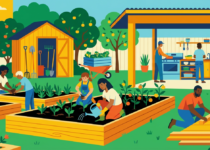
How Three Neighbors Turned a Vacant Lot Into the Heart of Elm Street
About Author
