Why Your School Board’s Mental Health Budget Actually Matters (And What Changed in 2025)
The Number Nobody’s Talking About at the Dinner Table
Nearly half of all parents in America are overwhelmed most days. Not occasionally stressed. Not worried about the usual stuff. Overwhelmed. That’s the finding from the Surgeon General’s Advisory on Parental Mental Health, which came out in 2024 and classified parenting stress as a full-blown public health crisis. The data is stark: 48 percent of parents reported overwhelming stress on the majority of their days. No other demographic group surveyed came close to those numbers.
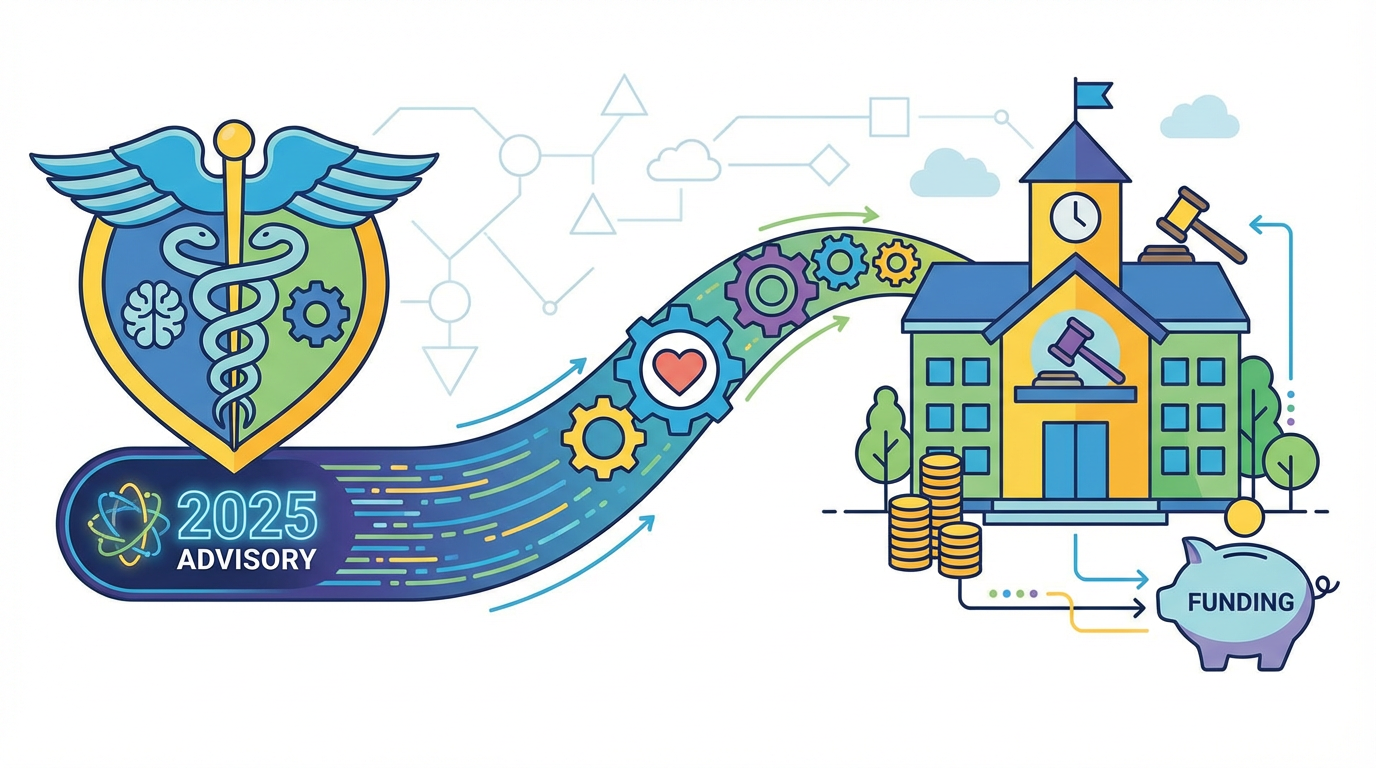
Here’s why this matters for your school board meeting: stressed parents have stressed kids. Those kids are showing up to school carrying that weight with them. And right now, your school is probably not equipped to help.

What’s Actually Happening in Your High School Right Now
Four out of every ten high school students report feeling persistently sad or hopeless. That number has been climbing steadily for over a decade, according to the 2025 Youth Risk Behavior Survey data from the CDC. This isn’t a blip. It isn’t a phase. It’s a sustained trend that has only gotten worse year after year.
Meanwhile, your district is likely operating with counselor-to-student ratios that look like this: one counselor trying to provide meaningful support to between 400 and 500 students. The American School Counselor Association recommends one counselor for every 250 students. Your school is probably sitting at about 1 to 408. That gap isn’t just a number. It’s real students not getting real help when they need it. It’s counselors triaging crisis after crisis instead of actually counseling anyone.
This is the concrete problem: the gap between what we know students need and what we’re actually providing. It’s not that people don’t care. The resources simply aren’t there.
The Money Actually Exists (and Here’s How to Find Out If Your District Got It)
In fiscal year 2025, the federal government allocated $1 billion in school mental health grants through SAMHSA, the Substance Abuse and Mental Health Services Administration. That money was distributed through state education agencies to local school districts. One billion dollars, sitting there, waiting to be deployed in schools just like yours.
Districts that successfully applied for 2024 Mental Health Services Professional grant funding received an average award of $680,000 per district. That’s enough to hire three or four full-time counselors for two full years. That’s not a band-aid.
So here’s the first thing you need to do: find out whether your district applied for this funding. Call the superintendent’s office. Ask specifically about SAMHSA mental health grants. Ask whether your district submitted an application in 2024 or plans to submit one in 2025. If they did receive funding, ask for the breakdown: how many positions were created, and what’s the plan for when that two-year funding ends? If they didn’t apply, ask why.
What You Can Actually Do at the School Board Meeting
Go to the next board meeting with two specific questions in your pocket. First: “What is our current counselor-to-student ratio, and how does it compare to the ASCA recommendation?” Second: “Has our district applied for available federal mental health funding through SAMHSA, and if so, what was the result?”
Don’t ask them to fix the mental health crisis. That’s too big. Ask them for the numbers. Ask them about the funding they haven’t pursued yet. Ask them about capacity. These are concrete, answerable questions. When board members have to actually engage with the gap between recommendation and reality, conversations shift. Budgets start to move.
Bring one other person with you. Two people asking about mental health funding has exponentially more impact than one. Sit in the front. Look people in the eye when they answer. Take notes. Ask follow-up questions if the answers are vague. This isn’t hostile. It’s the kind of attention that boards actually respond to.
This Is About What We’ve Already Lost
There’s a temptation, when talking about student mental health, to get nostalgic about some imagined past when everything was fine. That’s not what this is. We’re not mourning some golden age. We’re looking at a decade-long upward trend in student hopelessness and a system that structurally cannot support the young people who are suffering right now.
What we’ve lost is time. We’ve lost the gap between what we know works and what we’re actually doing. We’ve lost the money that sat on the table and wasn’t pursued because nobody pushed. We’ve lost the counselor position that wasn’t hired because nobody asked specifically for it.
The $1 billion that SAMHSA allocated in 2025 is real money. The $680,000 that successful applicants received is real money. The three or four full-time counselor positions that money could fund are real positions. The students who need those counselors are real students. The board meeting is next month, and there will be a seat available for you.
Read the Surgeon General’s advisory if you want the context. Check out SAMHSA School Mental Health Resources to understand what funding is actually available right now. Then show up. Ask the questions. Bring a friend. This is the work. It’s not flashy. It’s not complicated. It’s just the work.

Why Your Water Bill Just Changed and Four Other Council Decisions You Probably Missed
How to Build Community Trust When Institutions Have Broken It
Why Participatory Budgeting Produces Better Outcomes
About Author
