The Wild World of AI in Creative Arts: A New Renaissance?
Hey tech enthusiasts! I’m diving headfirst today into a digital rabbit hole that’s as mesmerizing and chaotic as a late-night brainstorming session. The fusion of artificial intelligence and creative arts. If that combo doesn’t make your neurons pop with curiosity, then maybe the thought of machines co-creating with us will floor you instead. Either way, let’s unravel this wild world of pixels, algorithms, and (hilariously) AI art critics.
The Dawn of AI Artistry
Picture this: Michelangelo, with a brush, draped over a cloud, looking down and exclaiming, “Blimey, they built machines to do art now!” Yep, AI has stormed the gates of creativity like an exuberant child running into a candy store. Initially, skepticism reigned supreme. Can a cold, logic-wielding machine truly capture the emotional depth of a Van Gogh?
AI doesn’t just try. It sometimes sets new benchmarks. Consider this: in 2018, an AI-generated portrait from the Paris-based collective Obvious sold for a whopping $432,500 at Christie’s. They named it “Edmond de Belamy,” a digital face mapped and crafted by a generative adversarial network (GAN). With sales like that, it’s clear that the art world is either grinning ear-to-ear or scratching heads, wondering when machines became Monet.
The Tech Stuff Without the Jargon
Alright, gather close because we’re going to talk shop without the mind-melting technical jargon. I promise! At the heart of this new digital brush stroke is something called a neural network, a kind of brain for machines. These networks learn by pattern recognition, sifting through thousands, even millions of artworks to create something originalish.
I won’t bore you with the details but think of it as baking. You’ve got your flour (data), your sugar (more data), and your eggs (even more data), and after an untold number of bakes, burns, and bites, voila! You’ve got art. Or at least, something you hope tastes like it.
Artists and Algorithms: A Collaborative Canvas
I recently chatted with a budding digital artist who uses an AI-powered software to spark ideas. “It’s like brainstorming with a genius who doesn’t talk back,” she mused, happily scrolling through algorithm-driven sketches. More artists are adopting AI as a kind of muse, one that never sleeps, gets coffee jitters, or feels uninspired on a Monday.
There’s even a growing movement for AI-human duets. Performances of music where AI composes and humans play currently grace stages worldwide. The lines are blurring between human and machine, and it’s exhilarating in a way that screams “future as sci-fi promised us!”
The Debate: Art or Algorithm?
As expected, our digital renaissance also comes with its fair share of heated debates. Purists argue that AI lacks the soul and improvisational magic inherent to human-made art. Meanwhile, tech evangelists counter that AI is simply another tool in the artist’s arsenal, the ultimate paintbrush of the digital age.
There’s no denying the potential here though! AI art democratizes creativity, opening up art-making to those who once lacked the technical skills or access. A boon for the creatively curious masses.
Speculating the Future: AI Art on Steroids?
Okay, let’s whip out the crystal ball and indulge me in some futurism. What if AI could interpret our emotions and paint them accurately? Picture an art piece that responds and changes with every glance, your digital Mona Lisa with ever-shifting expressions!
Or imagine AI curators in galleries, using sentiment analysis to arrange exhibitions that adapt based on audience mood. The grumpy commuter gets a serene blue landscape, while the gleeful tourist is greeted with wild abstracts. Art will become less about static displays and more about dynamic, personalized experiences.
Wrapping it Up: Not the End, but a Beginning
In the end (and this is both cliché and true), AI isn’t replacing artists. Instead, it’s stretching the boundaries of what’s possible in art and creativity. We’re not losing our humanity to the silicon circuits but creating a unique, weird blend of man and machine. Could AI write this blog? Probably not today. But it might just create something wildly different yet equally interesting tomorrow.
As we paddle through these uncharted waters, remember, the beauty of art lies not just in the final piece but in the journey of creation. AI is merely the charismatic co-pilot.
Feel free to share your thoughts, art aficionados and tech geeks alike. You’re the ultimate judges of this brave new world! Stay curious, stay creative, and until next time, keep those imaginations primed.

The Role of Voluntary Organizations in Crisis Response: Lessons from the Northwest
The Dashed Circle and the Solid Ball: What the ‘I Had Potential’ Shirt Actually Asks You to Read
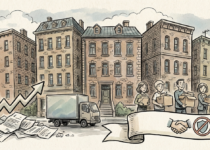
What We Lost When the Eviction Protections Ended — And What We Can Still Do About It
About Author
