The Quiet Force: How Voluntary Organizations Hold Communities Together in Crisis
Introduction: The Anchor Nobody Sees
When a crisis breaks—a flood, a pandemic, a sudden economic collapse—the cameras usually pan to the official response. Fire trucks, government briefings, uniformed teams. But if you look past the spotlight, you’ll find something else already in motion. It’s quieter, less shiny, and far more rooted. I’m talking about voluntary organizations: the neighbourhood watch that becomes a food delivery chain, the church group that turns its hall into a shelter, the sports club that morphs into a logistics hub overnight. These aren’t just helpers filling in the gaps. In my years of working alongside them, I’ve come to see them as the backbone of crisis response—practical, principled, and deeply woven into the fabric of their communities.
The Distinctive Character of Voluntary Action
What makes voluntary groups so different? It’s not simply that they work for free. It’s that they belong. They’re not outsiders arriving with clipboards and standard operating procedures; they’re the people who already know which elderly neighbour lives alone, which family has a child with allergies, and which back road washes out in heavy rain. That kind of knowledge isn’t gathered in a needs assessment. It’s earned over years of showing up.
And they move fast. Really fast. While official agencies are still waiting for sign-offs and funding releases, the local mosque has already opened its doors and started serving hot meals. The parent-teacher group has set up a phone tree to check on vulnerable families. I’ve seen a running club transform into a medicine delivery service in a single afternoon. This isn’t recklessness. It’s responsiveness built on relationships that already exist. The structures are there, dormant, until a crisis wakes them up.
More Than a Transaction: The Moral Core
There’s a principled dimension here that doesn’t get enough attention. Voluntary action isn’t a contract. Nobody’s paying for a service. People show up because they belong to a place, or because they hold a conviction that human dignity demands a response. That motivation changes the quality of the help. It’s not delivered with an eye on targets or reimbursement. It’s offered with a commitment to the whole person. When a volunteer sits with a flood survivor for an hour, listening to their story, they’re not ticking a box. They’re restoring something no government form can capture: the feeling that you haven’t been left behind.
This same moral grounding often pushes voluntary groups to speak up for people who slip through official cracks—the undocumented, the digitally excluded, those who don’t fit neatly into vulnerability categories. They become a gentle but persistent conscience, holding systems accountable to their own stated values.
Practical Functions: More Than Gap-Filling
It’s easy to describe voluntary organizations as simply filling holes left by the state. But that sells them short. In plenty of crises, they’re not the second line of defence. They’re the first. Before official alerts go out, neighbourhood WhatsApp groups are already checking on isolated residents. Before emergency shelters open, faith groups have unlocked their doors and put the kettle on. The voluntary sector often sets the rhythm that others then follow.
Here are some of the core functions I’ve observed again and again:
- Information gathering and dissemination: Local groups know who needs what and can communicate in languages and channels that official bulletins miss. They translate not just words, but context.
- Logistical improvisation: With limited resources, voluntary organizations excel at making do. A church hall becomes a food packing station; a minibus becomes a mobile testing unit. This adaptability is a form of resilience that money can’t buy.
- Psychosocial first aid: Crisis isn’t only physical. The listening ear, the familiar face, the community ritual maintained against the odds—these are the invisible repairs that prevent long-term trauma.
- Advocacy and navigation: Voluntary groups help people navigate complex aid systems, filling forms, making calls, and ensuring that rights aren’t lost in the chaos.
Coordination: The Delicate Dance with Formal Systems
One of the trickiest challenges is the relationship between voluntary organizations and official responders. In the heat of a crisis, good intentions can collide. Government agencies often want to control and standardize; voluntary groups thrive on autonomy and local variation. The tension is real, but it can be productive if it’s handled well.
Good coordination doesn’t mean absorbing voluntary groups into command structures. It means creating platforms where information flows freely, roles are clarified, and mutual respect is maintained. I’ve seen models where a local council provides a coordination hub—a physical space and a digital channel—where voluntary groups can self-organize, share updates, and request support without losing their independence. This approach treats voluntary action as a partner, not a subcontractor.
Trust is the currency here. It’s built before the crisis, through joint training, shared exercises, and simple relationship-building. When the floodwaters rise, the time for introductions has passed. The most resilient communities are those where voluntary organizations and public agencies have already learned each other’s rhythms.
Case in Point: The Spontaneous Volunteer Phenomenon
Every major crisis brings a surge of spontaneous volunteers—people with no prior affiliation who simply want to help. Managing this influx is a classic voluntary sector challenge. Without structure, their energy can dissipate or even hinder professional efforts. Yet with thoughtful coordination, they become a powerful resource. I recall a coastal town hit by severe flooding where hundreds of students arrived wanting to assist. A local voluntary organization quickly set up a registration point, provided basic safety training, and deployed them in teams to help elderly residents clean out their homes. The result wasn’t chaos, but community. The key was having a trusted local anchor that could absorb and direct goodwill.
This example underscores a broader principle: voluntary organizations aren’t just service providers; they’re community weavers. They turn individual compassion into collective capacity. In doing so, they strengthen the social fabric for the long term, not just for the immediate emergency.
Resilience Beyond the Immediate Crisis
The impact of voluntary organizations extends far beyond the acute phase of a disaster. In the weeks and months that follow, when media attention has moved on and government funding begins to wane, it’s often voluntary groups that remain. They run the support groups, organize the commemorations, and advocate for policy changes to prevent future harm. Their staying power comes from being part of the community, not parachuted in.
This long-term presence also allows them to address the root causes of vulnerability. A food bank that operates year-round isn’t just a crisis response; it’s a barometer of poverty and a platform for change. Voluntary organizations accumulate a deep, longitudinal understanding of community needs that should inform public policy. Too often, this wisdom is ignored because it isn’t presented in the language of official reports. We need better bridges between the experiential knowledge of voluntary groups and the data-driven world of policy-making.
Ethical Challenges and Principled Responses
Voluntary action isn’t immune to ethical dilemmas. The pressure to be seen as indispensable can lead organizations to overstep or to resist handing over responsibilities when state capacity is restored. There’s also the risk of volunteer burnout, where goodwill is exploited without adequate support. A principled approach requires honest self-assessment: Are we building community capacity, or are we creating dependency? Are we caring for our volunteers as well as we care for those we serve?
Funding is another thorny issue. Many voluntary organizations operate on shoestring budgets, relying on donations and small grants. In a crisis, money floods in, but it often comes with strings attached. Donors may want quick, visible results, while the real need is for sustained, quiet work. Maintaining integrity means being transparent about what’s possible and pushing back when funder demands risk distorting the mission.
There’s also the question of inclusivity. Voluntary groups, rooted in community, can sometimes reflect community biases. A principled organization actively works to ensure its services reach all, regardless of background, and that its volunteer base is diverse. Crisis response is a moment when solidarity must be universal, not tribal.
Building a Framework for Principled Voluntary Action
Based on years of observation and practice, I propose a set of guiding commitments for voluntary organizations engaged in crisis response:
- Subsidiarity: Decisions should be made as close to the affected community as possible. Centralized control often misses the nuance that local groups grasp intuitively.
- Solidarity, not charity: Frame the work as mutual aid among equals, not as a handout from the fortunate to the unfortunate. This preserves dignity and builds lasting bonds.
- Accountability to the community, not just to donors: The primary obligation is to those served. Reporting requirements shouldn’t distort that focus.
- Adaptive learning: Every crisis is a teacher. Voluntary organizations should systematically reflect on their actions, capture lessons, and adjust. Humility is a strategic asset.
- Volunteer well-being: Volunteers aren’t free labour. Their emotional and physical safety must be a priority, with clear boundaries, debriefing, and recognition.
Images of Voluntary Action
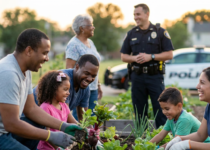
Visual documentation of voluntary work often focuses on the dramatic—the rescues, the rubble. But the true texture of this work is quieter. It’s the sorting of donations in a dusty hall, the hand on a shoulder, the map spread on a kitchen table. These images capture the essence: ordinary people choosing to be present for one another.



Frequently Asked Questions
What distinguishes voluntary organizations from government agencies in crisis response?
Voluntary organizations are typically rooted in the community, allowing them to respond with greater speed, flexibility, and personal knowledge of local needs. They operate on principles of solidarity rather than contractual obligation, which often translates into more person-centred support. Government agencies bring scale and statutory authority, but voluntary groups bring intimacy and trust.
How can spontaneous volunteers be effectively integrated during a crisis?
The key is having a pre-established coordination point—often a well-known local voluntary organization—that can register, brief, and deploy spontaneous volunteers safely. This requires simple but clear protocols: a check-in process, basic safety orientation, and tasks matched to skills. Equally important is emotional support for volunteers, who may be deeply affected by what they witness.
What are the biggest challenges voluntary organizations face in crisis response?
Beyond funding and burnout, the main challenge is often coordination with official systems without losing autonomy. Voluntary groups can be overwhelmed by unsolicited donations or by the sheer scale of need. There is also the risk of mission creep, where organizations take on roles for which they are ill-equipped, simply because no one else is filling the gap. Principled response means knowing when to say no, and when to advocate for others to step in.
How can communities support their local voluntary organizations before a crisis hits?
Preparedness is a shared responsibility. Communities can support voluntary groups by participating in training, donating flexibly (unrestricted funds are gold), and building relationships with local responders. Simple acts like updating contact lists, mapping local assets, and having contingency plans for vulnerable neighbours make a profound difference when crisis strikes. The time to strengthen the social fabric is in the calm, not the storm.
Conclusion: Recognizing the Quiet Force
Voluntary organizations aren’t a stopgap or a nice-to-have. They’re a manifestation of community will, a practical expression of the belief that we owe each other care. In crisis, they’re often the first to act and the last to leave. Their work isn’t always dramatic, but it’s always essential. As we think about building more resilient societies, we must move beyond seeing voluntary action as a charitable sideline and recognize it as a core component of our collective security. The quiet force of neighbours helping neighbours isn’t just heart-warming; it is, in the deepest sense, what holds us together when everything else falls apart.
Dr. Fiona Maclean is a researcher and practitioner in community resilience, with over two decades of experience working alongside voluntary organizations in crisis settings.
When Neighbors Become Strangers: Rebuilding Community Trust in an Age of Extremism

How Three Coffee Shops Changed Everything: A Small Business Collaboration That Actually Worked

When the Ground Shifts: Voluntary Groups as First Responders in Community Crisis
About Author
