The Disappeared Art of Showing Up: What We Lost When Events Became Productions
When Planning Meant Planning, Not Producing
Remember when the neighborhood block party meant Carol borrowed folding tables from the church, Jim brought his ancient grill that only worked if you kicked it twice, and everyone just showed up with whatever they had? I’m not romanticizing chaos here. Those events were messy. The sound system crackled. Kids spilled juice on everything. But something worked that we’ve systematically engineered out of our current approach to community events.
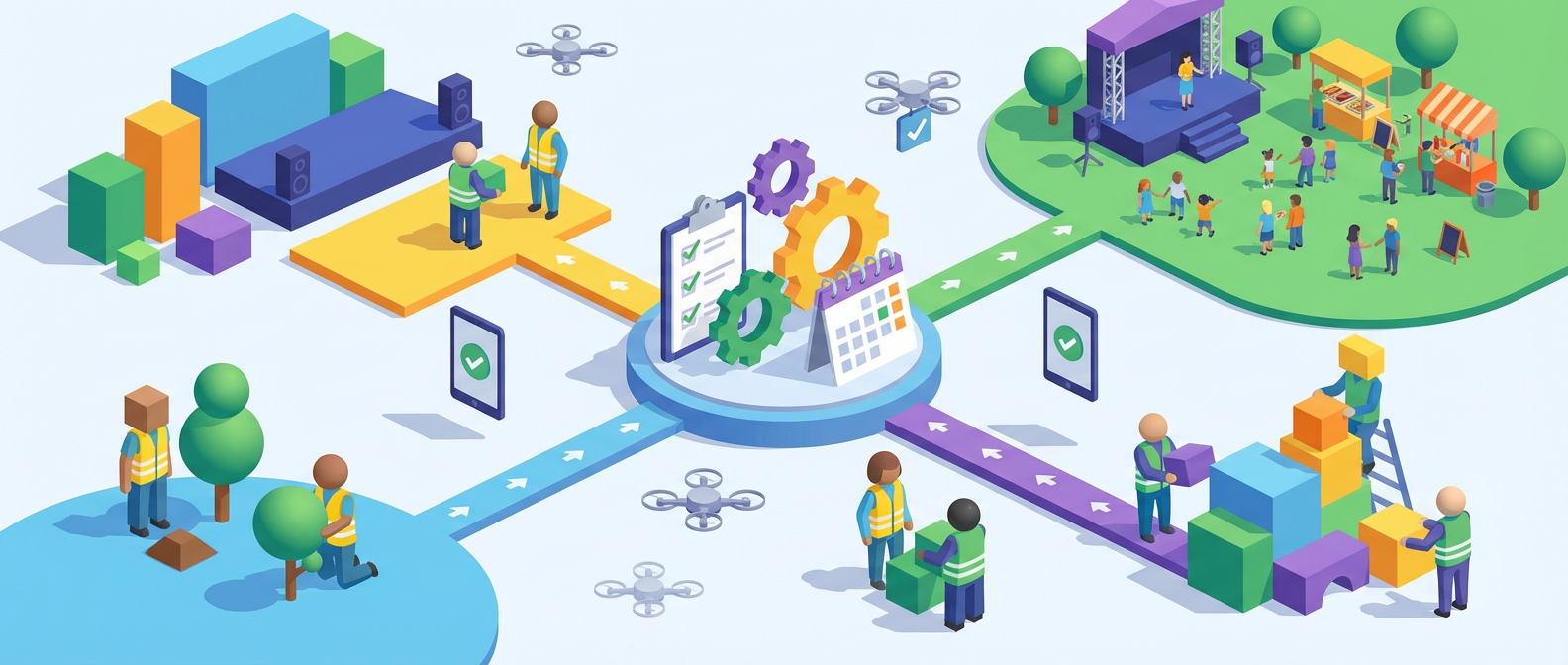
What worked was this: people knew their role without a coordinator assigning it to them. The planning happened in conversations, not meetings. Problems got solved by whoever noticed them first. When Mrs. Peterson’s famous potato salad ran out early, someone’s teenager got sent to the grocery store. No procurement process needed.
Today’s community events operate more like corporate product launches. We have committees for committees. Liability waivers for the liability waivers. I’ve watched volunteer coordinators spend three weeks scheduling a meeting to discuss the timeline for planning the volunteer appreciation event that will thank people for helping plan the main event. The process has eaten the purpose.

The Great Professionalization
Don’t get me wrong. Professional standards matter. Food safety rules exist for good reasons. Insurance requirements protect everyone involved. But somewhere between “let’s make sure no one gets sick” and “we need a certified event coordinator,” we lost something: the assumption that regular people could handle regular things.
I see this shift most clearly in our volunteer coordination systems. We’ve created roles for “Volunteer Experience Managers” and “Community Engagement Specialists.” These aren’t bad jobs. The people doing them work incredibly hard. But when did we decide that neighbors helping neighbors required professional management?
The old model had built-in redundancy. When Tom couldn’t set up chairs because his back went out, three other people already knew where the chairs lived and how many we needed. Now we have detailed task assignments and backup coordinator protocols. It’s more efficient on paper. It’s also more fragile in practice. One key person gets the flu and the whole thing wobbles.
What Actually Disappeared
The real loss isn’t nostalgia for simpler times. It’s the disappearance of specific capabilities that made community events sustainable. These aren’t abstract community-building benefits. They’re practical skills that kept things running.
First, we lost institutional memory that lived in people, not databases. Margaret knew which local businesses always donated and which ones needed a personal visit. Frank remembered that the park’s electrical outlet only worked if you held the cord at exactly the right angle. This knowledge didn’t require meetings to transfer. It got shared while setting up tables or cleaning up afterwards.
Second, we lost permission to improvise. Current event planning emphasizes risk management and consistency. Every scenario gets anticipated and addressed in advance. This creates smooth experiences, but it also trains volunteers to wait for instructions rather than solving problems. When something unexpected happens, everyone looks around for the coordinator. Nobody just handles it.
Third, we lost the rhythm of natural leadership rotation. People used to step up when they had time and step back when life got complicated. Leadership wasn’t a formal position requiring recruitment and training. It was something you did for a while, then passed along. This kept events connected to the actual people who showed up, rather than dependent on whoever was willing to commit to a multi-year volunteer position.
Small-Scale Solutions That Actually Work
I’m not suggesting we return to complete improvisation. But we can reclaim some of the advantages of the old model without abandoning safety or accessibility improvements. The key is designing for participation, not just attendance.
Start with setup crews that actually collaborate rather than executing assigned tasks. Skip “you’re in charge of decorations, you handle registration, you manage cleanup.” Try “we’re all setting up the festival, and here are the main things that need to happen.” People naturally sort themselves based on what they’re good at and what needs attention right now.
Build knowledge sharing into the work itself. When someone’s drilling holes for banner poles, have them explain what they’re learning to whoever’s holding the other end. When the person managing check-in figures out a better way to organize name tags, make sure they show someone else before the event ends. This isn’t extra work. It’s using the time you’re already spending together more effectively.
Create real decision-making roles for volunteers, not just execution roles. Let the people setting up the kids’ area decide how to arrange the activities based on what they see working. Give the folks managing parking authority to adjust the plan when they notice traffic patterns the organizers didn’t anticipate. People invest more energy when they have actual responsibility, not just tasks to complete.
The Practice of Showing Up
The deeper issue isn’t really about event planning techniques. It’s about whether we still believe communities can organize themselves, or whether we think they need to be organized. This isn’t a political distinction. It’s a practical one.
Communities that organize themselves develop capacity that extends beyond any individual event. People learn skills they use in other contexts. They build relationships that matter when someone needs help moving or when the school board makes a questionable decision. They practice collective problem-solving in low-stakes situations, which makes them more effective when bigger challenges arise.
Communities that get organized by professionals might have smoother events, but they don’t necessarily develop stronger communities. People attend rather than participate. They consume experiences rather than create them together. This works fine for entertainment, but it doesn’t build the social infrastructure that communities need for everything else.
This isn’t about rejecting professional expertise or returning to some imaginary golden age. It’s about recognizing what we’re optimizing for. If we want events that run smoothly and minimize risk, current approaches work well. If we want events that strengthen communities and develop local capacity, we need different methods.
The next time you’re planning something in your neighborhood, try this experiment: skip recruiting people to fill predetermined roles. Instead, invite them to help figure out what needs to happen and how to make it work. You might be surprised by how much people know and how much they’re willing to contribute when they’re actually needed, not just assigned.

When the Ground Shifts: How Voluntary Groups Hold Communities Together in Crisis
The Quiet Backbone of Crisis: How Voluntary Organizations Uphold Communities When Systems Fail
Your Neighborhood Small Business Support Toolkit: What Works, What’s Missing, and Where to Start
About Author
