How Three Neighbors Turned a Vacant Lot Into the Heart of Elm Street
When Maria Started Counting Cigarette Butts
Maria Gonzalez keeps a small notebook where she tracks things most people ignore. Last Tuesday’s entry: “47 cigarette butts, 3 fast food containers, 1 broken chair.” She’s been documenting the debris in the vacant lot at the corner of Elm and Third for eight months now, ever since her six-year-old started asking why the “sad dirt place” couldn’t have flowers like the parks downtown.
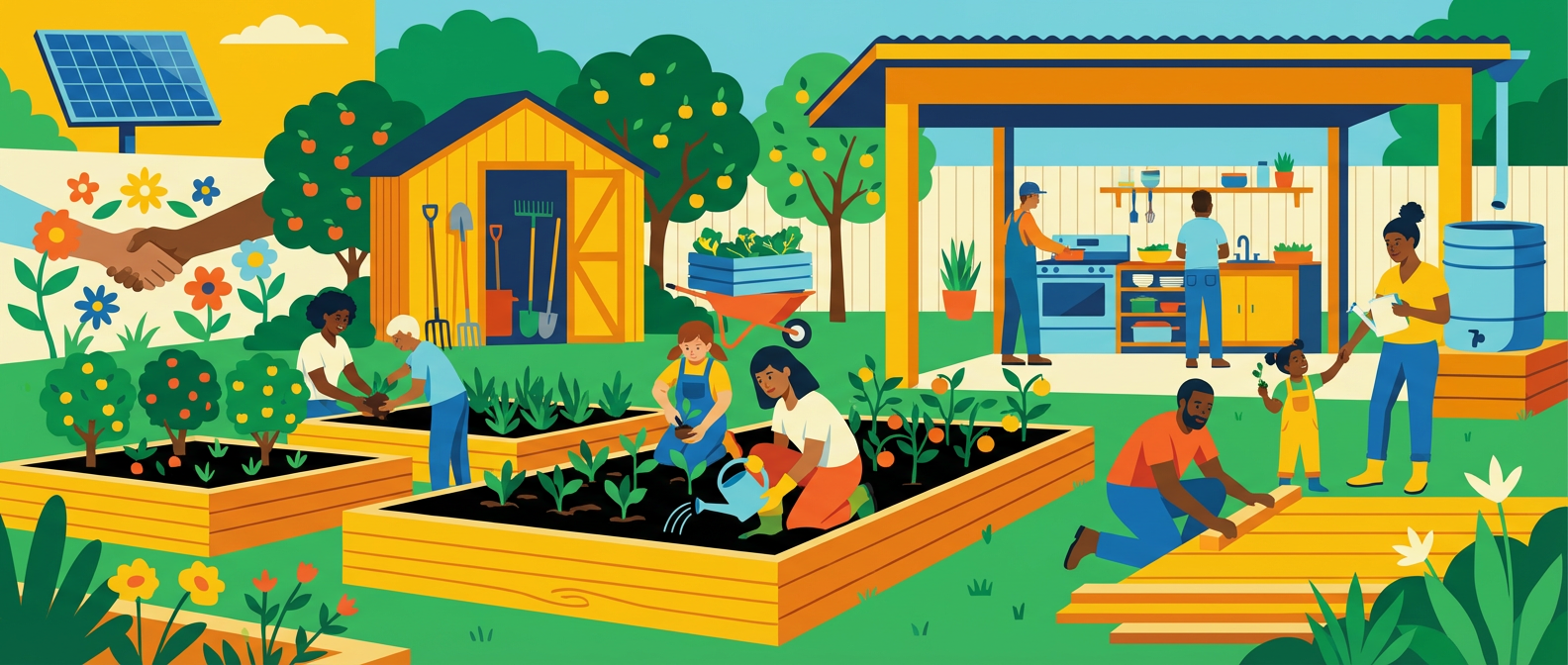
That’s how community gardens actually start. Not with city planning committees or nonprofit grants, though those come later. They start with someone who notices what everyone else has learned to walk past. Maria noticed that her neighborhood had plenty of corner stores and bus stops, but nowhere for kids to see how carrots grow or for elderly residents to sit in actual shade.
The lot belongs to the city, abandoned after a house fire in 2019. Maria discovered this by doing what most of us avoid: she called the Parks and Recreation department. Then she called again. The third time, she got transferred to Jim Chen in Community Development, who told her something surprising. The city had been hoping someone would ask about that space.

The Tuesday Morning Coffee Coalition
Jim Chen has been fielding calls about vacant lots for twelve years. Most conversations end with residents wanting the city to “do something” about problem properties. Maria’s call was different. She had a plan, rough as it was, and she’d already talked to neighbors. She wasn’t just identifying a problem. She was volunteering to help solve it.
Within two weeks, Maria had recruited Tom Bradley, the retired postal worker who knew every homeowner on the block, and Sarah Kim, whose background in environmental science meant she understood soil testing and drainage issues. They started meeting Tuesday mornings at Corner Café, spreading city zoning maps across the small tables while other customers ordered their usual.
This is where community change actually happens. Not in formal meetings with agendas and Robert’s Rules, but in spaces where neighbors can sketch ideas on napkins and argue about whether tomatoes or wildflowers make more sense for a corner plot that gets morning sun but afternoon shade.
The trio discovered that transforming a city lot into a community garden requires navigating three different city departments, getting liability insurance, and proving neighborhood support through a petition process most residents don’t know exists. Tom’s decades of government work helped them decode the bureaucracy. Sarah’s scientific background meant they could speak credibly about soil remediation and water management. Maria’s notebook full of observations became the foundation for their formal proposal.
The Art of Showing Up
Getting fifty-one signatures on a petition sounds simple until you try it. Maria, Tom, and Sarah spent six weekends going door-to-door, learning that community organizing is mostly about timing. Catch people leaving for work, and they’ll sign quickly but won’t engage. Visit during weekend mornings, and you might end up discussing property taxes and school funding for twenty minutes before anyone mentions gardens.
Mrs. Patterson, who’s lived on Elm Street for thirty-seven years, was skeptical. She’d seen plenty of neighborhood improvement projects start with enthusiasm and end with neglect. But she also remembered when the street had front porch conversations and kids played outside past dinner. She signed the petition and offered to contribute her late husband’s gardening tools.
The breakthrough came when Tom suggested they host a neighborhood meeting not to ask for support, but to ask for input. Instead of presenting a finished plan, they brought maps and markers and asked residents what they wanted to see. Parents pushed for educational space where kids could learn about plants. Senior citizens requested accessible raised beds and seating areas. Teenagers, surprisingly, asked for a section where they could grow vegetables to donate to the local food bank.
That meeting produced more than signatures. It created ownership. When people help design something, they’re invested in its success. The garden stopped being Maria’s project and became the neighborhood’s shared vision.
From Approval to Actual Dirt
City council approval came four months after the initial application, along with a small grant for soil testing and basic infrastructure. The real work began on a Saturday morning in March when seventeen neighbors showed up with shovels, work gloves, and a surprising amount of enthusiasm for moving rocks and pulling weeds.
Sarah had researched native plants that could handle the site’s challenging conditions. Tom organized volunteer schedules that matched people’s availability and physical capabilities. Maria coordinated with local businesses for donated materials and tools. But the garden’s personality emerged from decisions no committee could have planned.
Someone brought a boom box and accidentally created the tradition of Saturday morning work sessions with rotating music choices. Mrs. Patterson’s contribution of a small bench became the spot where neighbors naturally gathered to rest and talk. The teenagers’ food donation plot grew into a partnership with three local restaurants that now source herbs and vegetables from the garden.
Eight months after opening, the Elm Street Community Garden produces food, hosts educational workshops, and provides outdoor space for birthday parties and neighborhood meetings. More importantly, it creates opportunities for the kind of casual interactions that build social connections. People who never spoke beyond polite nods now coordinate vacation watering schedules and share gardening advice.
The Ripple Effect Nobody Planned
Success breeds imitation, but not always in expected ways. Two neighborhoods have contacted Maria about starting their own gardens, but others have focused on different shared spaces. One group is converting an unused church parking lot into a tool library and maker space. Another is negotiating with the school district to open a playground for community use after hours.
The city has taken notice too. Jim Chen says applications for community space projects have doubled since the Elm Street garden opened. The Parks and Recreation department is developing a streamlined approval process and resource guide for neighborhood groups. Policy change often follows successful demonstration, not the other way around.
What started with Maria counting cigarette butts has become a model for how small-scale community organizing can create real change. The garden itself is lovely, but its real value lies in proving that neighbors can identify problems, develop solutions, and work with local government to make improvements happen.
If you’re curious about community organizing or want to visit the Elm Street garden, Maria still meets interested neighbors at Corner Café most Tuesday mornings. She brings the same notebook, though now it tracks harvest yields and volunteer hours instead of litter. The problems she documents these days are the kind neighborhoods are happy to solve together.

The Quiet Force: How Voluntary Organizations Hold Communities Together in Crisis

Religious and faith communities in a secular age — An Honest Service

The Art of Showing Up: What Three Years of Neighborhood Organizing Actually Taught Me
About Author
